The Process of Community Innovation
Big challenges require not only big solutions, but more effective and equitable approaches. Pollen
has reached out to three organizations that role-model innovation in
how they address advancement of a community need in their work.
These organizations
understand a key element to reaching innovation: it’s not the solution
or idea that is innovative, it’s the process of inclusivity,
collaboration, and resourcefulness throughout all stages of
problem-solving that transcends a solution into breakthrough change.
Innovation is not linear, but operates on a continuum

African Immigration Services, the Brookings Supports Breastfeeding
coalition, and the Plains Art Museum have each identified projects that
address a need and are emboding a community-centric, problem-solving
process to create new solutions. All three projects received Community Innovation grants from the Bush Foundation and are examples of certain stages within the community innovation process.
Step 1: Increase Collective Awareness

Step 2: Generate Ideas

Step 3: Test and Implement Solutions

Communities across our
region should consider how Community Innovation grants could act as
civic R&D in bolstering their development and testing of new
solutions.
Applications for the Community Innovation grants close March 13, 2014. More information and application here.
Step 1: Increase Collective Awareness
African Immigrant Services
has institutionalized a culture of community innovation and inclusion
in how they better understand and take action with issues directly
impacting their communities. Abdullah Kiatamba, executive director of
AIS, believes the key is access to information and then mobilizing for
action.
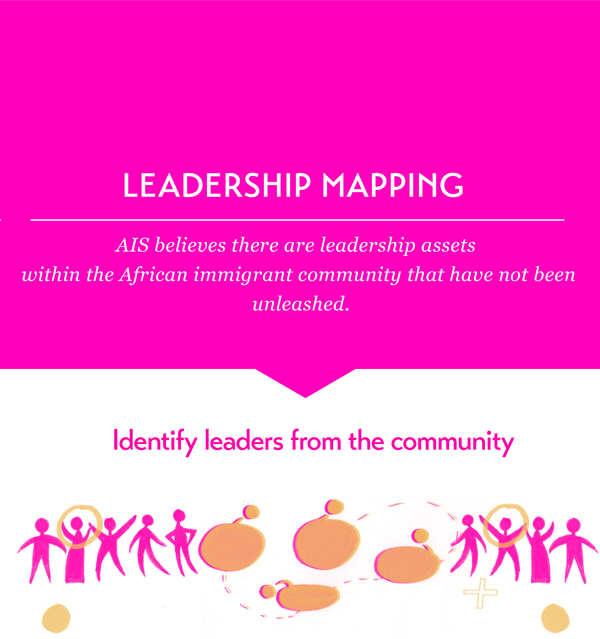
Below you will find a storygraphic that
outlines AIS' work and how they plan to use community education and
engagement to change the roles of African immigrants and other
underrepresented groups in the northwest suburbs of Hennepin County from
observers to active leaders.


The AIS African FOTL Project seeks to shift the roles of people of
color, especially African immigrants, from the sidelines to the heart of
community-driven problem-solving, co-creating new realities on issues
aligned with their interests and passion. Community members will
participate in cohorts or community circles that match their areas of
interest (education, community-police relations, information gaps,
economic opportunity, etc.). Each cohort, focused on a particular
interest, will first engage in a process of agenda-setting. These
cohorts will identify a list of problems for which community-driven
solutions should be applied. They will then prioritize those issues,
set timelines, and then activate existing community resources and
assets to solve them. The project will also identify, prepare, and
match a cohort of leaders with leadership positions in public
institutions, where their roles will help advance racial equity (closing
a host of disparities, including access and opportunities).


Step 3: Test and Implement Solutions
In the heart of downtown Fargo, the Plains Art Museum
is reimagining its borders and relevancy as a flagship institution and
rethinking its contribution to the thriving vibrancy overtaking the
local community. The museum has identified public art as a key to break
through barriers of inclusion and access with surrounding communities
that are often isolated from one another. Implementing projects through
the Public Art and Community Engagement program, the museum will set out
to shape a more expansive vision for the role of public art in
Fargo-Moorhead.


The Plains Art Museum's Director, Colleen Sheehy, has brought on
a new key position, central to the community work. Earlier this year,
Karis Thompson started as the museum’s community engagement liaison. She
will act as a continuous thread blurring the line between institution
and community.

Karis' work within the community will touch each project:

National and local Artist-led initiatives will reimagine vacant urban
venues for demonstration projects in public art. Importantly, the museum
won’t control the sites. The museum knows involving the community as
caretakers will be critical for creating continued advocates for the
sites’ preservation and protection.

The Fern Grotto will be onsite of an old trainstation,
and a boxcar will be transformed into a garden. The site will serve as
public art space that is open all year round—especially in the winter.

The Moorhead Power Plant will be torn down, and the new
site design will serve as a reminder of the power plant while drawing
new communities in and linking the site to the river and adjacent park.
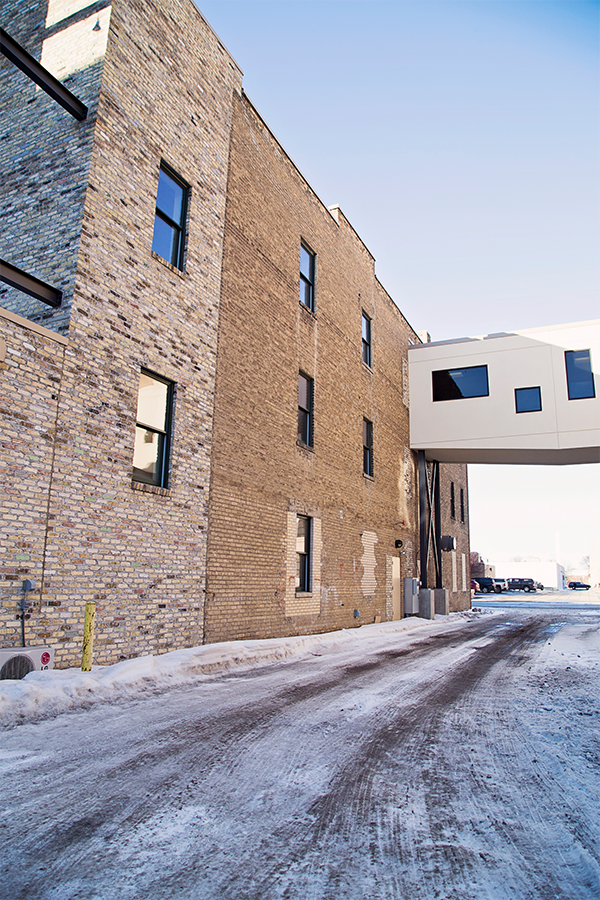
The Pollinator Garden on Museum Grounds will create a
landscaped amenity within the hardscaped neighborhood, but also a place
for education and modeling of sustainable design.

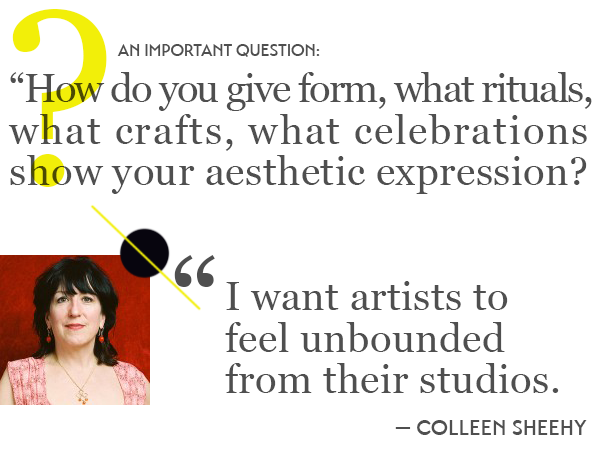
This will be an artist and
community engagement exhibition that will bring people together to
create and experience temporary art and activities that address
community needs. The project will spark community discussion around a
simple question.

A symposium will bring together Midwestern artists to discuss and
demonstrate social engagement art practices occurring in the Midwest.
Colleen Sheehy believes this event will show our region what’s possible
through the medium of public artwork without looking to New York for
ultimate validation.

In communities where catastrophes, like flooding, are main catalysts for
bringing people together for problem-solving, it’s critical to
reimagine how public space can build community around commonality.
Public art and the institutions like the Plains Art Museum can provide
the framework. It is deeper than just trying to gain a robust, diverse
audience. It’s about investing in the people who live in the shared
community.
Photo credit: Abby Bischoff